The Flood Cleanup Company in Trader's Point
When water is spreading through your Trader's Point home, Trader's Point Water Restoration delivers fast, around the clock emergency response across northwest Marion County. Our IICRC certified crews handle the full job from extraction and structural drying through reconstruction, and we coordinate directly with your insurance carrier.
We return missed calls within 15 minutes, so keep your phone nearby after you call.


Trader's Point Water Restoration is the Trader's Point, IN water damage restoration company homeowners call first: emergency water removal, structural drying, sewage cleanup, and mold prevention, available 24/7 with insurance coordination on approved claims. Call (317) 342-7736.
- Services: water damage restoration, basement flooding, sewage cleanup, storm damage
- Service area: Trader's Point, Marion County, IN and surrounding areas
- Response time: Same day for Trader's Point inquiries; 24/7 emergency service available
- Licensed and insured (License #RC21100059)
- Serving Trader's Point, IN since 2018
Schedule Your Free Damage Assessment
Our inspection in Trader's Point homes is a room by room walkthrough, not a quick look. We measure walls at multiple heights with non penetrating meters, then confirm with penetrating probes where readings spike. We pull baseboards and trim where moisture has tracked, check subfloors and insulation in suspect cavities, look behind cabinets and appliances, under sinks, around water heaters and washing machines, and along the basement perimeter and slab joints. Thermal imaging maps hidden moisture inside wall assemblies, a penetrating meter confirms the readings, and a hygrometer logs ambient conditions. Thorough mapping is what prevents the most expensive problem in water restoration: a pocket of trapped moisture in a Trader's Point wall cavity that fuels mold colonization thirty days after the visible damage looked dry.
I agree to be contacted by Trader's Point Water Restoration regarding my inquiry.
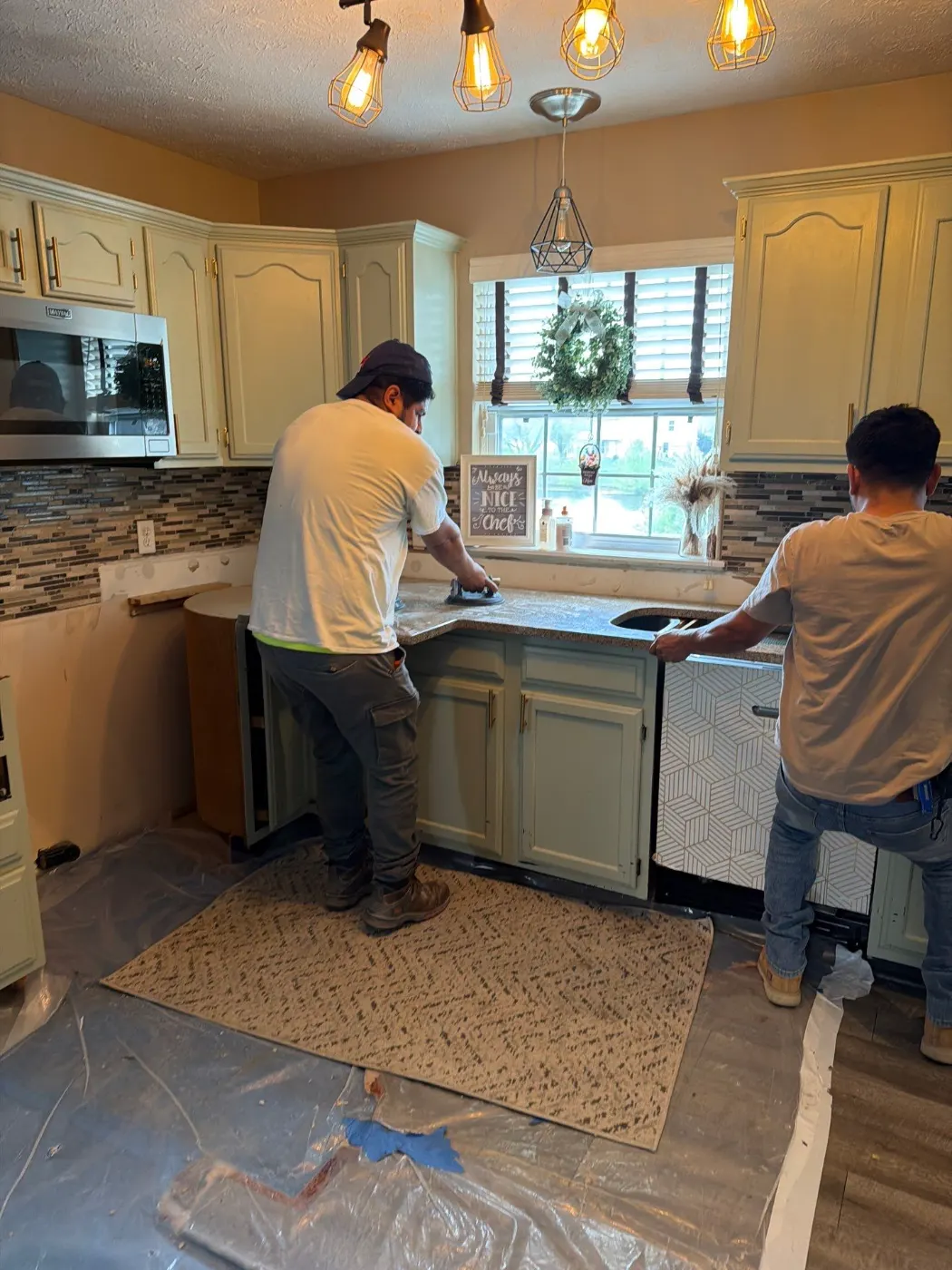
Kitchen water damage in Trader's Point runs on appliance schedules: dishwasher supply lines, refrigerator ice makers, and sink drains all fail eventually. Water under cabinets and beneath flooring hides until it warps. Fast extraction and cavity drying saves cabinetry that replacement would cost thousands to match.
Water finds subfloors, and subfloors decide flooring's fate. Extraction from carpet and pad, moisture checks beneath vinyl and laminate, and drilled cavity drying where needed keep Trader's Point floor systems intact. Skipping this step is how new flooring fails over old moisture.
Financing options and insurance coordination make serious Trader's Point water losses workable. Nobody plans for this expense; the company handling it should make the money side as navigable as the moisture side.
Payment Options That Work for You
Your Trader's Point Water Restoration project lead will walk you through every financing option during the assessment, and every term is in writing.
Pay for your project at a later time, but lock in today's pricing. Ideal for homeowners waiting on insurance settlements.
- No payments for 12 months
- No interest if paid in full
- Lock in current pricing today
Divide your project cost equally across 12 months with zero interest. Most homeowners choose this option for predictable budgeting.
- Equal monthly payments
- 0% interest for 12 months
- Simple, predictable budgeting
Spread your investment over up to 20 years with fixed equal payments. The right choice for larger projects or homeowners who prefer lower monthly amounts.
- Up to 20-year terms available
- Fixed equal payments
- Ideal for larger restoration projects
Subject to credit approval. Ask your project lead for current terms and promotions.
Water Damage Restoration Work Across Trader's Point
These are the water problems we answer calls for around Trader's Point, from basement flooding to sewage backups.
Water Damage Restoration in Trader's Point
Serving Trader's Point: full scope water damage response covering extraction, structural drying, moisture verification, and reconstruction for residential losses. Includes Category 1 and Category 2 events from supply lines, appliances, and clean water sources.
Learn moreBasement Flooding in Trader's Point
For Trader's Point addresses, standing water removal, finished basement dry out, and material assessment for groundwater intrusion, sump pump failures, and storm runoff events. Includes evaluation of subfloor, drywall, insulation, and stored contents.
Learn moreSewage Cleanup in Trader's Point
Serving Trader's Point: category 3 black water cleanup with containment, PPE protocols, removal of contaminated materials, and antimicrobial treatment per IICRC S500 and S520 standards.
Learn moreStorm Damage in Trader's Point
In Trader's Point, water intrusion response after wind driven rain, fallen tree impacts, and storm related building envelope failures. Includes extraction, drying, and reconstruction of affected interior assemblies.
Learn moreCommercial Water Restoration in Trader's Point
For Trader's Point addresses, water damage response for commercial properties including offices, retail spaces, and multi tenant buildings. Coordinated to minimize business interruption during extraction, drying, and reconstruction phases.
Learn moreCommercial Flood Damage Cleanup in Trader's Point
For Trader's Point addresses, large loss flood response for commercial sites, including bulk water extraction, document and inventory triage, structural drying, and contaminated material removal.
Learn moreCommercial Sewage Cleanup in Trader's Point
Serving Trader's Point: commercial sewage and Category 3 contamination response, with containment, HEPA-filtered negative air, and disposal of affected materials per IICRC protocols.
Learn moreCommercial Mold Remediation in Trader's Point
For Trader's Point addresses, commercial mold remediation following IICRC S520, including containment, controlled removal of contaminated materials, antimicrobial treatment, and post remediation verification.
Learn moreCommercial Storm Damage in Trader's Point
In Trader's Point, commercial storm response covering water intrusion mitigation, structural drying, and reconstruction of affected interior space for businesses returning to operation.
Learn more
Local Expertise, Real Results
Documented moisture readings, written scope, and verified dry standard before any wall goes back up in a Trader's Point home.
Water damage in Trader's Point compounds quickly. The visible water comes out fast, but the moisture in wall cavities, behind cabinets, under subfloor decking, and inside insulation is what causes the call back six weeks later. Trader's Point Water Restoration maps every wet pocket on day one across Trader's Point and documents the full scope.
Trader's Point Water Restoration serves Trader's Point homeowners with full scope water damage restoration, covering the 46278 corridor, surrounding Marion County, and adjacent communities like Zionsville, Augusta, and Crooked Creek. Our restoration work has been built around the kinds of losses common to this corner of the county: finished basement intrusions, supply line failures in larger custom homes, and storm runoff events near the Eagle Creek watershed. Every crew responding to Trader's Point is built from experienced technicians, not temp work, and led by IICRC certified technicians on a licensed and insured roster. That means the same trained team that arrives for the emergency call stays with the project through final reconstruction.
Our methodology follows the IICRC S500 standard for water damage restoration, with IICRC S520 governing any mold remediation work that follows. On every Trader's Point job, we start with moisture assessment using thermal imaging and penetrating meters, confirm the Category of water, then move to controlled extraction and structural drying with monitored air flow and dehumidification sized to the affected square footage. Antimicrobial application is used where contamination or extended saturation warrants it. Before reconstruction begins, we verify materials have reached dry standard against unaffected baseline readings, because reopening walls weeks later is the most expensive mistake in this trade.
Our Promise
Three things we commit to every Trader's Point homeowner who calls Trader's Point Water Restoration. First, fast emergency response dispatched day or night, because every hour without extraction expands the damage into more materials. Second, IICRC certified technicians trained to the S500 standard handling assessment, drying, and any mold work that follows. Third, a free on site inspection before any work begins, and full coordination with your insurance carrier if you have an active claim, so the scope and documentation match what your adjuster needs to process the loss.
Why Trader's Point Homeowners Choose Us
Certified technicians, documented moisture standards, and clear scope from inspection through final walk through, all the way through reconstruction in Trader's Point homes.
Around the Clock Emergency Dispatch
Water damage in Trader's Point does not wait for business hours, and neither do we. Our 24/7 emergency line routes directly to dispatch, and crews are loaded with extraction equipment, dehumidifiers, and air movers ready to roll. Fast response is the single biggest factor in keeping a Category 1 loss from becoming a Category 2 problem.
IICRC S500 Standard Throughout
Every technician on the crew is trained to the IICRC S500 standard for water damage restoration. In practice, that means Category determination is documented, drying targets are based on unaffected baseline readings, and moisture verification happens before any wall goes back up. Certification is the floor for our work, not the ceiling.
Mitigation Through Reconstruction
Most Trader's Point homeowners do not want to hire a separate general contractor after the dry out. We handle extraction, drying, demolition, and the rebuild: drywall, flooring, paint, trim, cabinetry. One team carrying the project from the first emergency call through the final walk through.
Insurance Coordination Done Right
We work directly with your insurance carrier, documenting every affected area with photos, meter readings, and a written scope tied to S500 protocol. Most major insurance carriers expect prompt mitigation and clear justification, and our paperwork is built to match what your adjuster needs to approve the claim cleanly.
Real Jobs. Real Results.
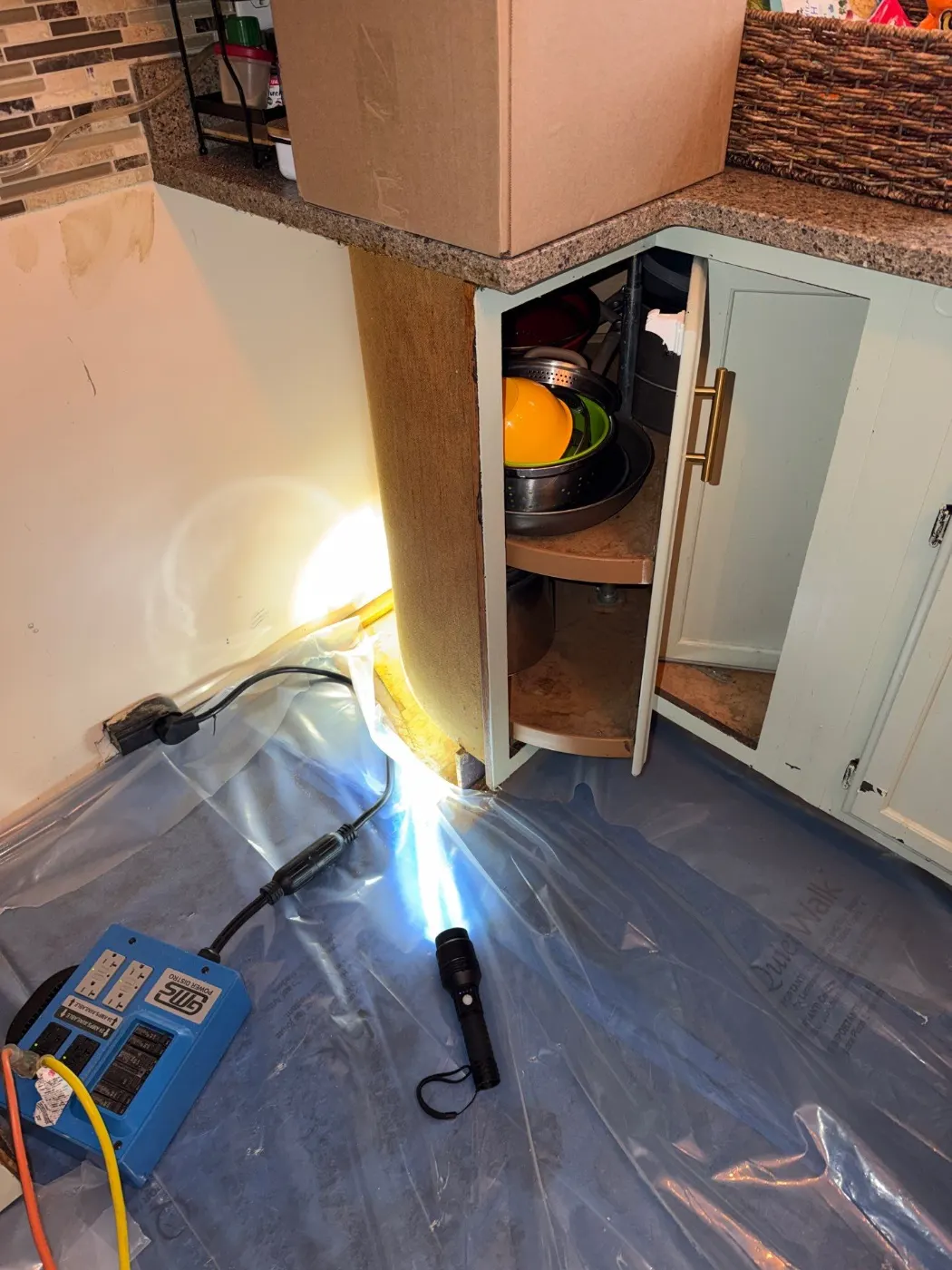
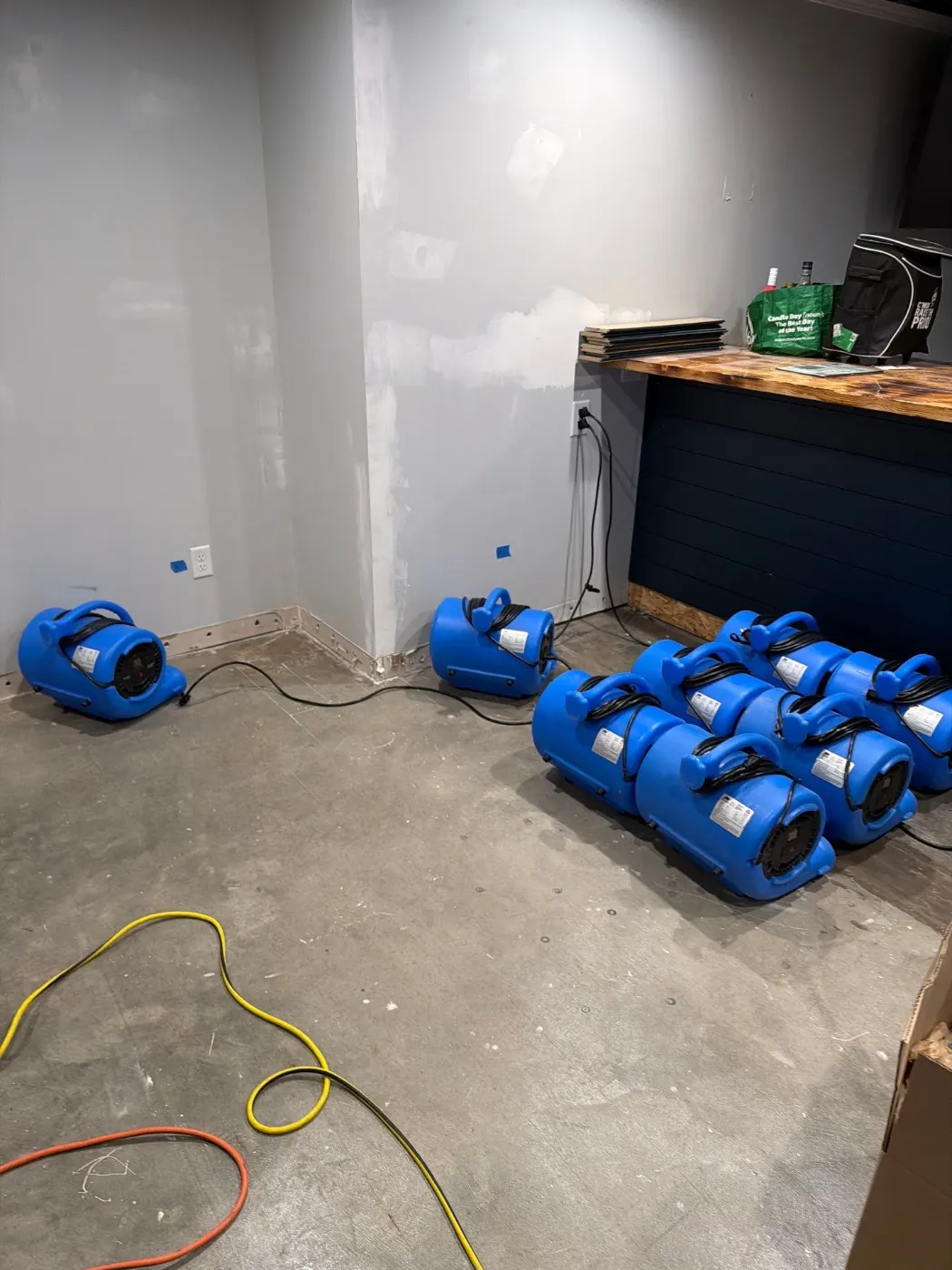
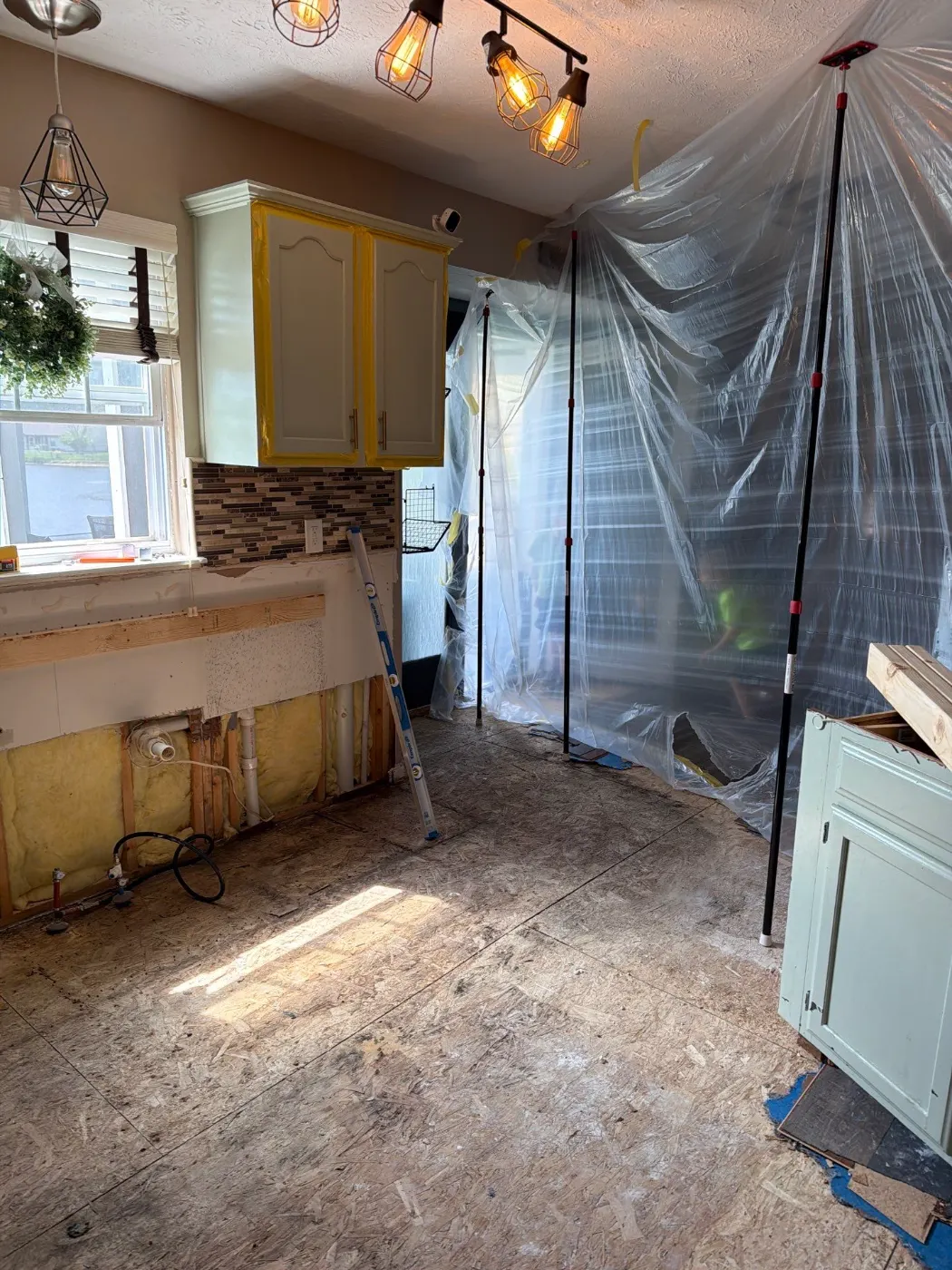
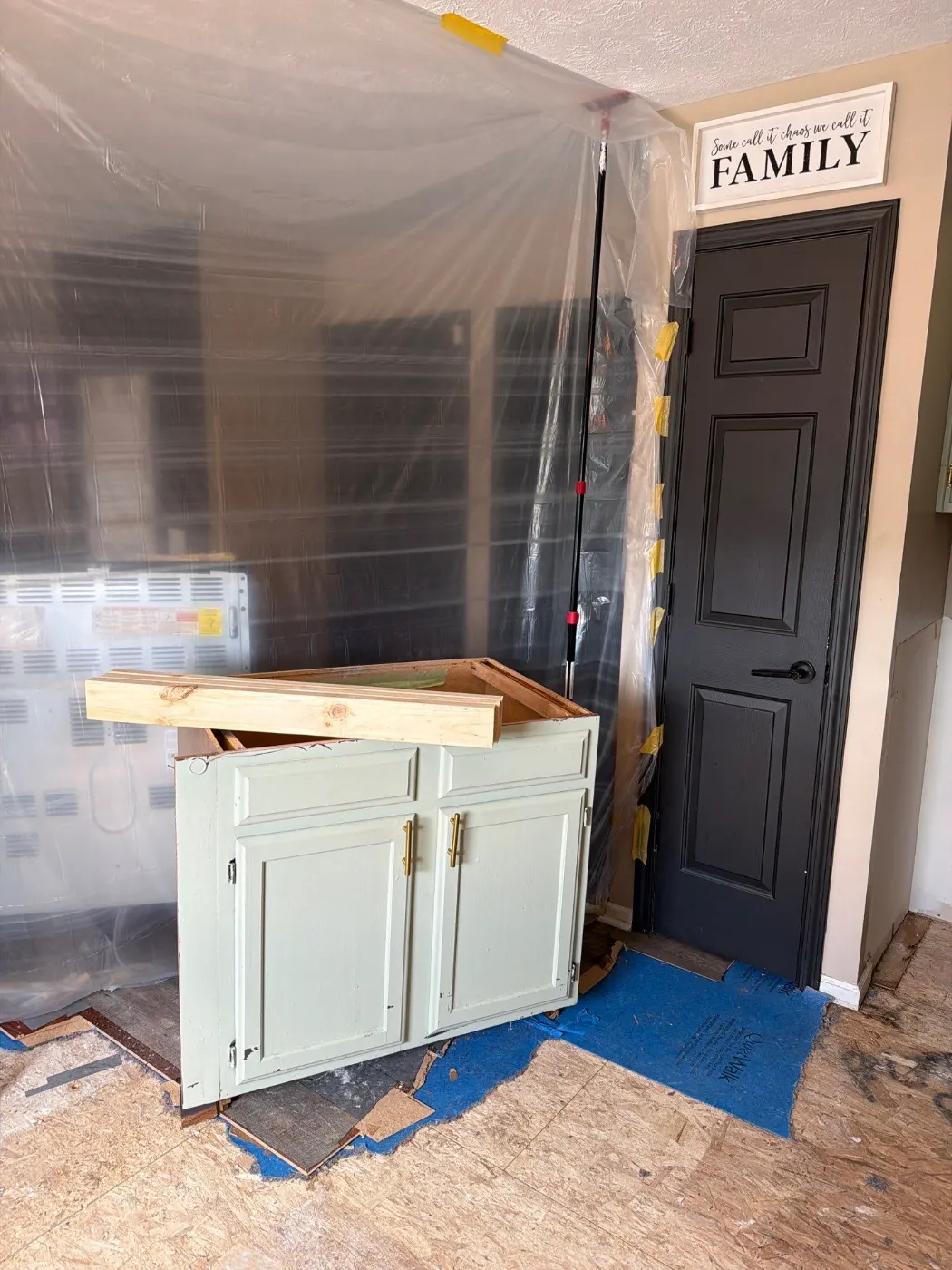
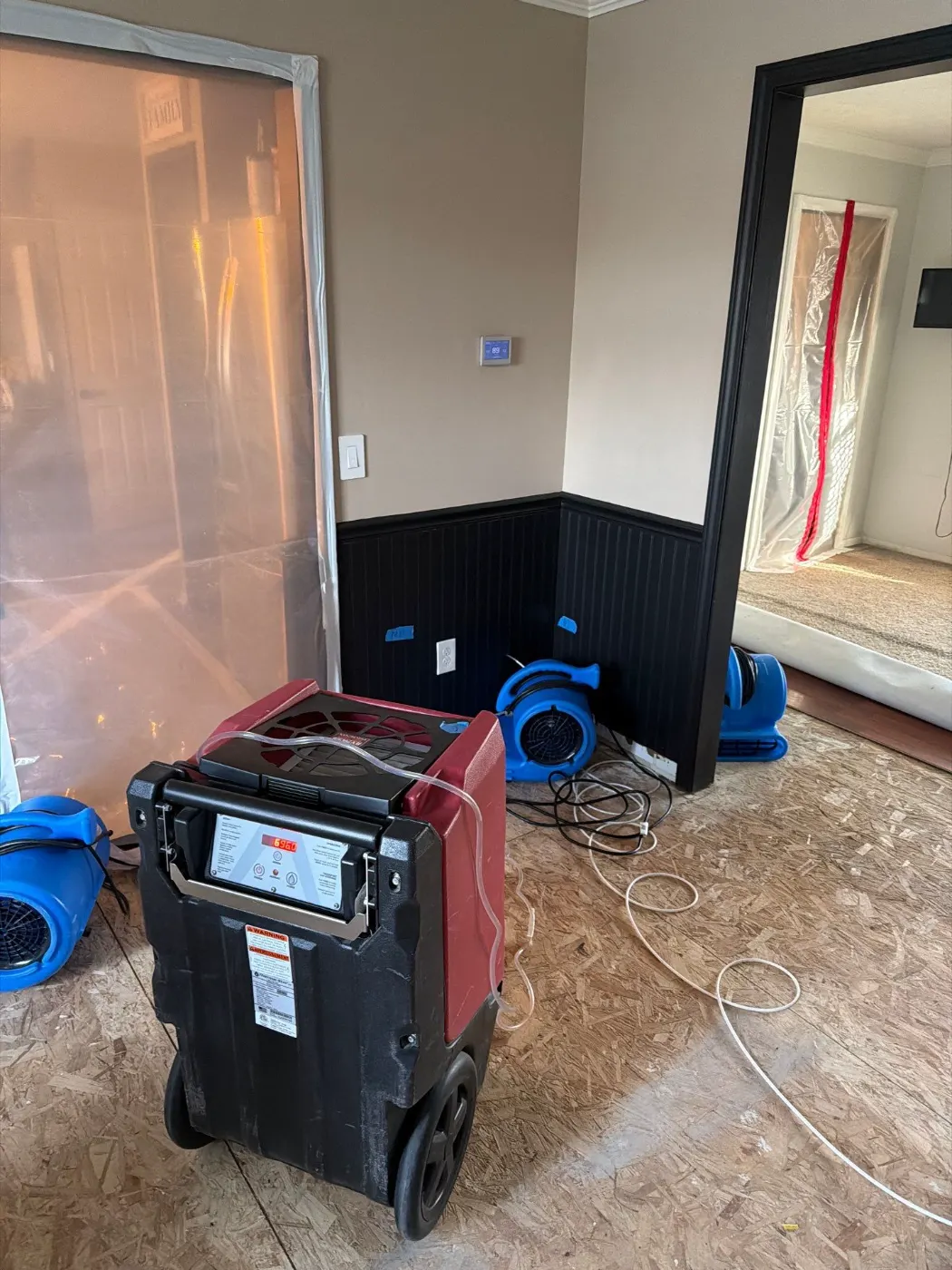
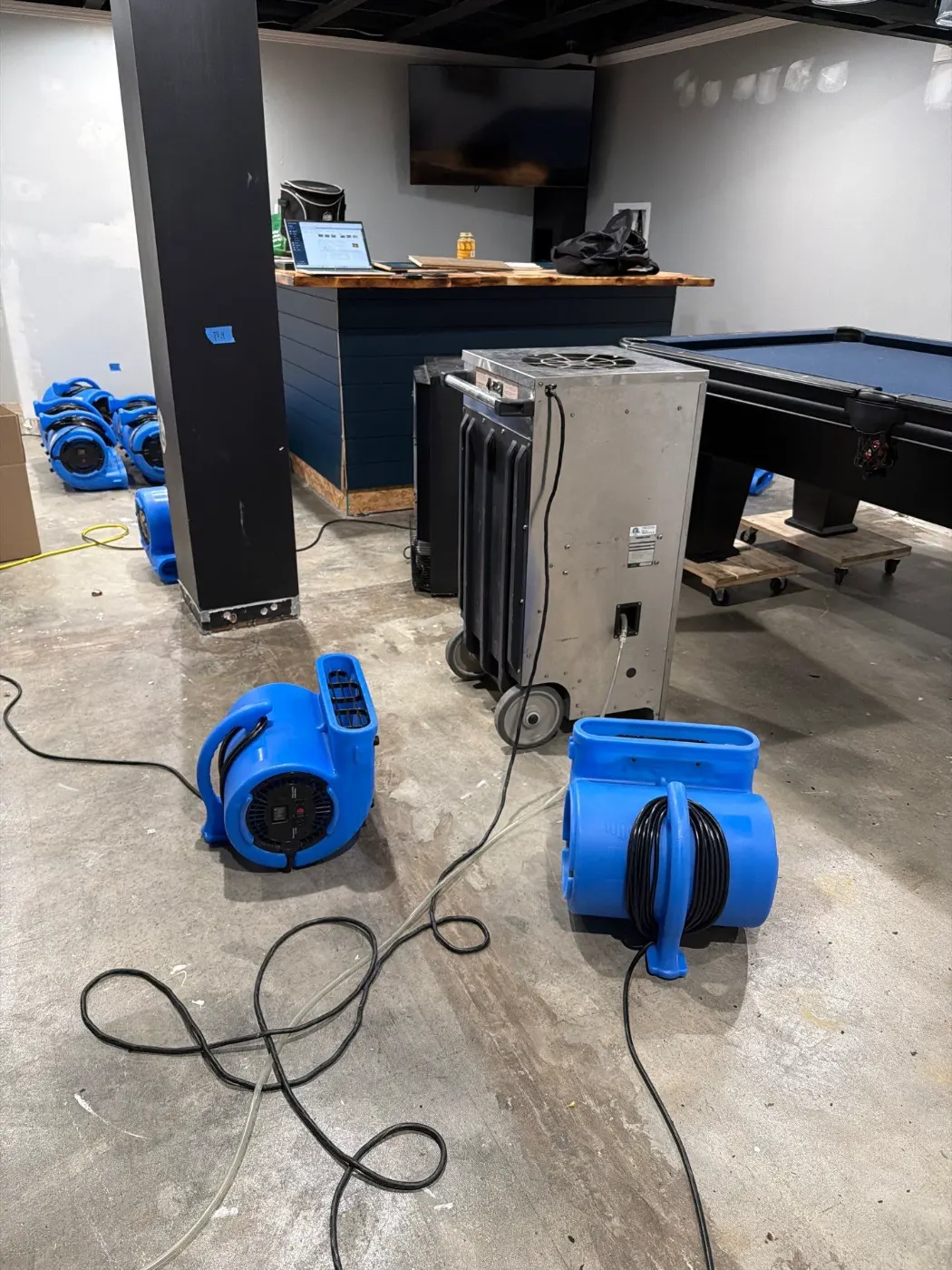
Real Trader's Point water restoration projects across Marion County, from finished basement extractions to full mitigation through reconstruction jobs on custom homes with hidden moisture and Category 3 losses.
From First Call to Dry Standard
When our crew arrives at a Trader's Point home, the first phase is moisture assessment and Category determination. We walk the property, identify the source (broken supply line, dishwasher discharge, sewage backup, storm intrusion through a compromised window or door), and use thermal imaging plus penetrating meters to map the actual extent of saturation behind walls and under flooring. The water is then classified as Category 1, 2, or 3 per IICRC S500. This phase typically takes one to two hours and produces the written scope that drives everything that follows.
Next comes insurance coordination and documentation. Before any mitigation equipment runs, we photograph and video every affected area, log meter readings into a written moisture map, and contact your insurance adjuster directly. Scope of work is matched to coverage, and mitigation steps are justified against the S500 standard so the carrier has what they need to process the claim. Most Trader's Point homeowners never have to navigate this paperwork themselves. We handle it directly with your carrier while you focus on getting your household back to normal.
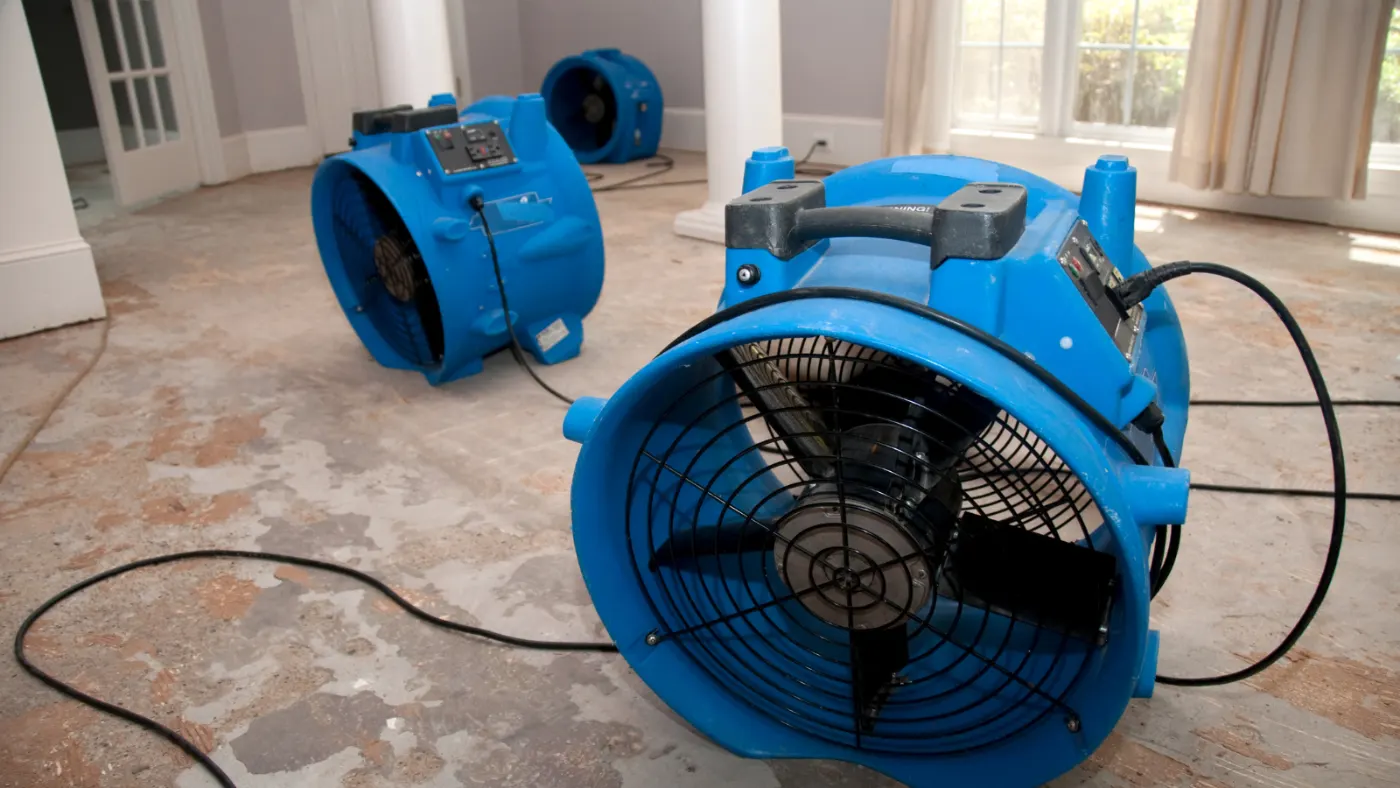
Drying execution is where most of the calendar time gets spent. Air movers and commercial dehumidifiers are placed using structural drying calculations matched to the affected square footage and material types. Daily monitoring with logged readings continues until structures hit dry standard, meaning moisture content in affected materials matches unaffected baselines. Demolition is controlled and limited to what cannot dry in place. From there, reconstruction proceeds: drywall, insulation, flooring, paint, trim, cabinetry, returning the Trader's Point home to pre loss condition.
Rapid Emergency Dispatch
Call comes in, crew loads out. Trucks carry commercial water extraction equipment, dehumidifiers, professional air movers, thermal imaging, and meters. A certified lead tech runs the on site assessment so decisions get made in the field, not relayed back to an office hours later.
Category Determination
Every Trader's Point loss is classified per IICRC S500: Category 1 (clean supply line water), Category 2 (gray water from appliances or toilet overflow without solids), or Category 3 (sewage, floodwater, long stagnant water). Meter readings are logged and a written assessment drives scope, equipment, and PPE protocols.
Insurance Partnership
We work with your insurance carrier, not around them. Scope is justified against S500, photos and moisture maps support every line item, and the adjuster gets documentation that matches industry standard. Invoicing stays transparent.
Drying to Verified Standard
Equipment runs, readings get logged daily, and materials are confirmed dry against unaffected baselines before reconstruction starts. Closing up walls over moisture is how mold problems show up a month later. We do not skip that verification step.
Water Damage Sources in Trader's Point
Tub and Shower Pan Leaks
Tub surrounds leak at the spout penetration, at the valve escutcheon, and where the deck meets the wall. Any of the three puts water behind the surround, soaking framing and subfloor without ever running across the bathroom floor.
Burst Supply Lines
Common in January and February when temperatures drop below 10°F and a poorly insulated supply line behind a kitchen or bathroom wall freezes and splits. Often discovered when the thaw begins.
Frozen Pipe in an Exterior Wall
Kitchen sinks on outside walls, second floor baths over unheated garages, and any run through a rim joist are the usual spots. Opening cabinet doors on the coldest nights and letting a fixture trickle costs nothing and prevents most of these.
Appliance Failures
Water heaters typically last 8 to 12 years. Trader's Point homeowners with heaters past that age are running on borrowed time. When the tank fails, it can release 50 gallons or more into the surrounding area.
Sink Drain and P-Trap Leaks
Drain water carries food waste, soap, and whatever went down the sink, which pushes it out of the clean category under IICRC S500. Porous cabinet material that soaked it up generally comes out instead of getting dried in place.
Roof Leak Reaching the Ceiling
By the time water shows on a ceiling it has already crossed the attic. It runs down a rafter, wets the insulation, and drops through the drywall at the low point, which is often several feet from where it came through the roof.
How to Protect Your Trader's Point Home in the First Hour of a Water Leak
Start by stopping the water, then keep people and pets away from wet outlets and dirty water. Everything else on this list protects your things and makes the drying go faster once our crew gets to your home in Trader's Point.
1. Find your main shutoff
In homes with a basement, the main shutoff is usually on the wall closest to the street. In homes without one, look in a utility closet or near the water heater. Close it and leave it closed until the leak is fixed.
2. Watch the ceiling
If water is coming through a ceiling, keep people out of the room below. A ceiling that sags or bulges can hold a lot of water, and the light fixtures in it may be wet, so turn those circuits off at the panel if you can do it safely.
3. Treat sewage water with care
Water from a sewer backup can carry bacteria, so avoid touching it with bare skin. Close the door to the affected room if you can, and keep everyone on a dry floor until the crew arrives with protective gear.
4. Save the paperwork
Deeds and family records are hard to replace, so move them to a dry room before anything else. Put them in a plastic bin or a sealed bag if the rest of the house is damp.
5. Pull up rugs and mats
Wet area rugs and bath mats hold water against the floor. Roll them up and move them to a garage or a dry room, and set any furniture that stays behind on foil squares to keep stains off the carpet.
6. Leave the record to us
You have enough to deal with in the first hour. Our crew documents the damage with photos and moisture readings as soon as we arrive, and we walk you through what we found once the work is underway.
7. Let the air reach wet spots
In rooms with clean water, open closet and cabinet doors so air reaches the wet spots. On a hot, sticky day, keep the windows closed and leave the air conditioning on, since it pulls moisture out of the air.
8. Call before the water spreads further
The sooner the crew starts drying, the more of your floors and walls can be saved. Call as soon as the water is off, even late at night, since our dispatch line runs 24/7.
Keep this list handy, and call us as soon as the water is shut off so the crew can start drying your home.
Three Simple Steps
Three steps cover the whole job, and you'll know which one we're on the entire time.
Trucks Roll
Our emergency line answers day or night, and dispatch follows within 2 hours. Gear is staged in advance, so extraction starts when the crew walks in.
Inspection Phase
This is the difference between a scope and an estimate. The documentation is yours to keep, claim or no claim.
Finished on Numbers
Reconstruction waits on verified dry, every time. The same company that dried it hangs the drywall back.
What the Photo Report Shows Trader's Point Homeowners
From the first walkthrough, our crew documents the damage with photos and moisture readings. That record becomes your photo report, and it's how you can see what's happening inside your home from your living room.
The source, in pictures
Whether it was a cracked pipe or a sump pump that quit, the first photos in the report show the source up close and in the context of the room around it. That helps your plumber see the same thing we saw.
Water you can't see
Water often ends up somewhere out of sight, like under cabinets or inside a wall cavity. The report shows those spots with readings and photos so nothing gets closed back up while it's still wet.
Photos of every affected room
The crew photographs each affected room before anything is moved or removed, then again as the work moves along. You'll see the same corner of the same room on the first day and on the last.
Saving what can be saved
Drying in place is usually less disruptive than tearing out and replacing, and the readings show when it's possible. The report notes what the crew is drying in place and what it plans to remove, with photos of both.
Progress you can follow
Each visit adds a new set of readings and photos, so the report shows the drying day by day. If one spot dries slower than the rest, you'll see it in the numbers along with what the crew is changing to fix it.
Questions are welcome
Ask about anything in the report that doesn't add up. The crew can take a new reading while you watch and explain what it means for that room, and seeing a dry wall next to a wet one makes the numbers easier to follow.
What to do with it next
With the report in hand, you can make your own decisions about the repair. We document damage with a photo report and walk you through what we found, so you can decide with your insurance company after you check your own policy.
The report starts the moment our crew walks in, so the sooner you call, the sooner you'll have a clear record of the damage.
What to Ask Before You Hire in Trader's Point
Clear answers to these questions make it easier to compare restoration companies in Trader's Point.
Does my policy require a certain company?
Ask your adjuster before you sign anything, and read the work authorization so you know what you're agreeing to.
What happens if you find mold?
Ask how mold behind walls or under floors gets handled, and whether that work is priced apart from the drying.
Who handles repairs after drying?
Ask who replaces drywall, flooring, paint and trim once the structure is dry, and whether one company can do both stages.
Who will be working in my home?
Ask whether the crew works for the company you called or for a subcontractor, and who's in charge on site each day.
How will you show me it's dry?
Ask for moisture readings on the first visit and the last one, so you can see the numbers reach dry standard.
Can I see an itemized estimate?
Ask for every line item in writing. Many insurers price water losses in Xactimate, so an estimate in that format is easier for an adjuster to review.
Indiana Weather Drives Restoration Calls Year Round
Indiana weather drives most of the calls we take in Trader's Point. Winter freeze thaw cycles burst supply lines in older copper systems, spring rain saturates soil along the Eagle Creek watershed until basements take on water, and summer thunderstorms overwhelm storm drainage and push runoff through window wells and walkout doors.
Spring Saturation Flooding
Indiana spring rain stacks day after day, and the soil around Trader's Point homes near the Eagle Creek watershed reaches full saturation quickly. Hydrostatic pressure then pushes groundwater through foundation cracks, around slab joints, and up through floor drains when sump pumps fall behind. We extract, dry, and address the affected materials before mold takes hold.
Winter Pipe Bursts
Indiana freeze thaw cycles hit hard, and the older copper supply lines common in custom Trader's Point homes built between the 1970s and 1990s are vulnerable at solder joints when temperatures swing. A 2 AM burst in a vacation home or upstairs bathroom can dump hundreds of gallons before anyone notices. We respond around the clock for these calls.
Summer Storm Runoff
Heavy summer thunderstorms across northwest Marion County drop more rain than the storm drainage can move, and surface runoff finds basement window wells, garage thresholds, and walkout basement doors. We extract standing water, dry the affected materials, and identify saturated insulation or subfloor that has to come out.
Ice Dam Leaks
When snow accumulates on Trader's Point roofs and refreezes at the eaves, meltwater backs up under shingles and into ceiling assemblies. The damage shows up as stained drywall and wet insulation in upstairs rooms. We focus on the water intrusion side: extracting trapped moisture, drying the cavity, and replacing damaged materials once the source has been addressed.
Trader's Point Neighborhoods We Serve
The neighborhoods below are where we answer calls around Trader's Point, and each one opens to notes on its homes.
Where we respond near Trader's Point
Our dispatch line runs 24/7 for Trader's Point and the communities closest to it.
What Water Damage Looks Like in Trader's Point
What Trader's Point homes and weather mean for a water loss.
About Trader's Point Homes
Homes in Trader's Point span a wide era: midcentury ranch style homes from the 1950s,1960s sit alongside custom estates built in the 1970s,1990s, with additional new construction from 2000 to the present. Homes from the 1950s,1970s likely feature galvanized or early copper plumbing, while those built in the 1980s,1990s transitioned to copper, and post-2000 construction may include PEX supply lines. The area is dominated by medium to large single family homes, including sprawling ranch estates and two story custom homes on large wooded lots, typically with finished basements and spacious garages. The rural residential character means most properties sit on generous acreage, and finished walkout basements are commonly advertised across multiple subdivisions.
Where We Work in Trader's Point
We cover homeowners across Trader's Point near Eagle Creek Park, Eagle Creek Reservoir, Traders Point Creamery, Traders Point Shopping Center, Lafayette Road (U.S. 52), I-65/I-465/I-865 interchange (Pike Township triangle), Pike High School, Fishback Creek Public Academy.
Surrounding Areas We Serve
Our crew also covers Zionsville, Eagle Creek (Indianapolis), Augusta/New Augusta, Crooked Creek, Snacks/Guion Creek, College Park.
Recent Weather Patterns
Eagle Creek historically flooded its banks severely, notably in 1913 and 1956,57, prompting the construction of Eagle Creek Reservoir (1966,1970) for flood control. The broader northwest Indianapolis area continues to face elevated stormwater runoff risk from heavy rainfall events, and local environmental advocates have warned that ongoing development replacing forests and wetlands near Eagle Creek is exacerbating flooding for nearby homes.
What Our Crew Sees in Trader's Point
Trader's Point sits adjacent to Eagle Creek and its reservoir, placing lower lying properties near documented flood plain zones tracked by both FEMA and Indiana's DNR Floodplain Information Portal; homes along creek adjacent lots in subdivisions like Watersedge and West 86th face direct surface water and groundwater intrusion risk. The area's large share of custom homes built in the 1970s,1990s means many properties carry aging copper plumbing systems susceptible to joint failure, while Indiana's pronounced freeze thaw cycles create recurring burst pipe exposure each winter. Finished basements are prevalent across the housing stock in 46278, making sump pump dependency and basement water intrusion common concerns, particularly on wooded lots where mature tree roots can compromise aging sewer laterals and drain tile systems.
The Trader's Point Area
Trader's Point has a population of approximately 4,600,7,900 residents with an average household income of roughly $157,675, well above the national average, and a homeownership rate near 93,94%. The neighborhood ranks among the top 15% highest income areas in the United States, with a majority of adults employed in executive and professional occupations.
How Trader's Point Water Damage Gets Repaired
Three phases, each with its own standard and its own paperwork.
Emergency response is what shows up first, and the truck is loaded for it. Commercial water extraction equipment pulls standing water from carpet, hard surfaces, and subfloor. Commercial dehumidifiers sized to the affected square footage go in next, paired with professional air movers placed to push humid air across wet materials. Moisture meters and thermal imaging confirm where the water has actually traveled, which is usually further than the visible staining suggests. Extraction begins promptly on site, structural drying setup happens the same day, and daily monitoring with logged readings continues from there. Work zones are contained with plastic, unaffected areas of the Trader's Point home are protected, and we communicate day by day on what to expect. This phase covers most Category 1 and Category 2 losses.
Specialized containment is the phase that applies to Category 3 water (sewage backup, floodwater, long stagnant standing water with biological contamination) and to full mold remediation per IICRC S520. We build 6-mil plastic barriers floor to ceiling, seal entry points, and run negative air machines that pull contained air through HEPA filtration before exhausting outside the work zone. Technicians work in full PPE: Tyvek suits, N95 or P100 respirators per S520, nitrile gloves, eye protection. Contaminated materials get cut and bagged for disposal, antimicrobial is applied to the remaining structure, and post remediation verification with air sampling is performed when warranted. This is the phase where IICRC certification matters most. Corner cutting on containment or PPE is what causes the long term indoor air quality and health problems that show up months after the visible work is done.
Reconstruction is where the home actually gets put back together. Drywall hung, taped, mudded, sanded, primed, painted. Flooring replaced: carpet pad, vinyl plank, hardwood refinish, tile reset. Trim and baseboards reinstalled or replaced to match. Cabinetry repaired or swapped out where saturation pulled apart the substrate. Doors rehung, electrical and plumbing finish work coordinated with the licensed trades. The structure of our work is built around one project number from the initial emergency call through the final walk through, one project manager the Trader's Point homeowner talks to, one schedule, one final invoice. Most restoration companies hand off after drying to a separate general contractor: two crews, two schedules, two billing cycles, and weeks where the home sits open in demolition between phases. We do not run the project that way.
Living at Home During a Dry Out in Trader's Point
Once the water is out, the drying equipment stays in your Trader's Point home for several days, and in many cases you can stay there with it. Knowing what to expect from the noise and the power use makes those days easier.
Expect steady noise
Air movers sound like strong box fans, and dehumidifiers add a low hum. A closed door between a bedroom and the equipment helps at night, and the crew can sometimes angle a unit away from a bedroom wall if the noise carries.
Set units back the way they were
The crew places each unit based on where the readings are wettest. If you bump one or need to get past it, set it back the way it was, aimed at the same spot.
Keep the room set up the same way
The crew will tell you which doors to keep closed and where to set the thermostat. Drying works by controlling the air in the room, so keeping it the way it was set up keeps the drying on schedule.
Keep cords clear
Cords run along the floor between the outlets and the equipment. Leave them where the crew routed them, and keep rugs and furniture off the cords so they stay cool and easy to see.
Safe paths through the house
Equipment and cords can turn a familiar hallway into a tripping spot, especially at night. Leave a light on along the path you use most, and keep small kids away from the units while they run.
A crew visit each day
Someone from the crew stops by each day to take readings and move the equipment where it's needed. Tell them about anything new you notice, like a musty smell or a soft spot in the floor.
Keeping moisture down
EPA puts it this way: the key to mold control is moisture control. In practice that means drying your home quickly and keeping the humidity down once the equipment is gone.
What happens after drying
Once everything reads dry, the crew pulls the equipment and you get the final readings in your photo report. Any drywall or flooring that came out can be put back after that, and the crew will talk through the rebuild with you.
Once the house is dry, the photo report and the final readings are yours to keep with your home records.
Water damage pricing in Trader's Point
Mitigation ranges calibrated to the Trader's Point market. Final pricing depends on water volume, materials affected, and IICRC Category.
Answers for Trader's Point Property Owners
If you're dealing with water in your Trader's Point home right now, start with these answers.
Expert Trader's Point Restoration Crews Available Now
Water spreading through your Trader's Point home right now, or hidden moisture you suspect behind a wall, we dispatch crews for fast emergency response day or night. Free on site inspection, no obligation, and we coordinate directly with your insurance carrier from the first phone call.