Commercial Flood Damage Cleanup in Trader's Point, IN
Below grade levels, loading docks and warehouse floors pumped and dried across Trader's Point by commercial crews.
Trader's Point Water Restoration provides professional Commercial Flood Damage Cleanup in Trader's Point: emergency availability every day of the year, certified crews, and coordination with your insurance carrier on approved claims. Call (317) 342-7736.
- Service: Commercial Flood Damage Cleanup for Trader's Point homeowners
- Service area: Trader's Point, IN and surrounding areas
- Response time: 24/7 live dispatch; emergency crews prioritized for Trader's Point
- Licensed and insured (License #RC21100059)
- Serving Trader's Point, IN since 2018
Commercial Flood Cleanup in Trader's Point
We handle commercial flood cleanup across Trader's Point, and we'll start with the areas your business needs back first.
Flood Exposure Here
Flood risk here runs highest for sites close to Eagle Creek, which has a history of flooding. Your building's own flood exposure gets mapped when we walk the site with your facilities contact.
Our flood crews work commercial sites throughout Trader's Point, including the blocks around the Traders Point Shopping Center. We also handle commercial flood cleanup in Augusta/New Augusta, Eagle Creek, Zionsville and College Park.
Commercial Flood Damage Cleanup for Trader's Point Businesses
Floodwater leaves a layer behind when it drops. Silt works into carpet tile seams and trench drains, and the film it leaves on the slab holds moisture long after the standing water is gone. Trader's Point Water Restoration removes mud and silt from commercial buildings in Trader's Point before drying equipment goes in, since equipment can't dry what's buried under it.
The file Trader's Point Water Restoration builds on a commercial flood loss runs to photographs by area and phase, readings by location and material, equipment hours by room and a contents inventory. It's organized so you, ownership or a commercial adjuster can find any piece of it without calling the office. You get the whole thing for your Trader's Point property.
Inventory triage gets documented before anything moves. The crew photographs product in place, records what was sitting in water and how deep, separates what's salvageable from what isn't, and logs quantities by item. Cases on the bottom layer of a pallet usually tell the story for the whole stack. That record is what supports the inventory portion of the claim, and it has to exist before the dumpster shows up.
Some carriers send their own consultant or indoor environmental professional to a large loss. Trader's Point Water Restoration works with them, hands over readings and logs on request, and schedules around their sampling so the testing reflects real conditions. On mold work, independent post remediation verification is the normal path, and the company doing the remediation supports that testing while an outside party performs it.
While you sort out which policy applies to a flood, the building keeps absorbing water. Call Trader's Point Water Restoration to get the pumping and drying started on your Trader's Point property, and the file will show the source and extent of the loss for whichever policy your agent and the adjuster decide responds.
Signs You Need Commercial Flood Damage Cleanup
If you notice any of these in your Trader's Point building, schedule a free inspection before the issue worsens.
Beads of moisture under plastic sheeting or mats taped to a concrete floor for a day or two
Water sitting in the loading dock well because the dock drain can't keep up
VCT or sheet vinyl lifting at the seams, with adhesive bleeding through or going soft underfoot
White powdery efflorescence appearing on block or poured concrete walls on a below grade level
Carpet tile squares curling at the edges or lifting at the corners across an open office area
Pallet bottoms dark and soft, with cardboard cases on the lowest layer collapsing under weight
Silt packed into trench drains and floor drains after a flood
A damp dark band across the concrete slab that spreads overnight and shrinks during the day
Dripping from the deck above into a drop ceiling, with wet insulation visible through the grid
Retail storefront taking water under the front doors during a heavy rain
How Trader's Point Water Restoration Handles Commercial Flood Damage Cleanup
We follow these steps in order on every Trader's Point job.
Staged Water Drawdown
Below grade levels get pumped down in stages while the soil outside is still saturated. The crew pauses between passes to check walls and slab, and logs the water level each time.
Source and Contamination Check
The crew records where the water came from and what it crossed, and photographs the entry point. Floodwater and sewer backups get containment with HEPA filtered negative air before anything else, and every load of soaked material that leaves gets documented.
Daily Documentation
Moisture readings, temperature and humidity logs, equipment counts by room, and photographs get recorded every day equipment runs. Affected materials get compared against dry standard readings taken elsewhere in the same building, so the file shows a drying trajectory an adjuster can follow.
Phased Section Release
Areas that reach dry standard get released back to use while the crew keeps working sections that still hold moisture. Each release carries the readings for that zone, which lets the property come back in pieces as the building and your own occupancy requirements allow.
Final Readings and Walkthrough
Equipment is pulled in stages as each material meets the dry standard on consecutive visits. The crew lead then walks the building with you, and the final readings by location go into the file.
Commercial Flood Damage Cleanup in Trader's Point
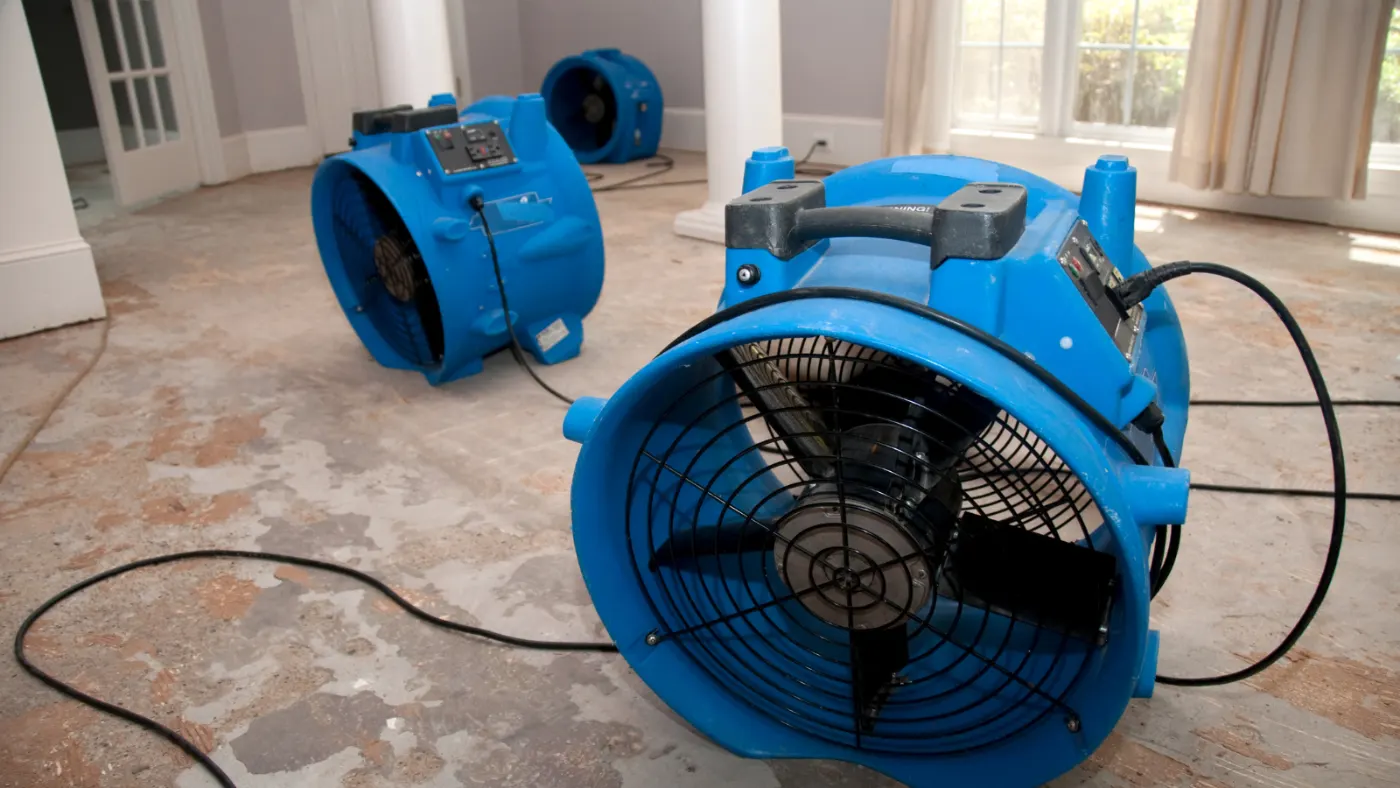
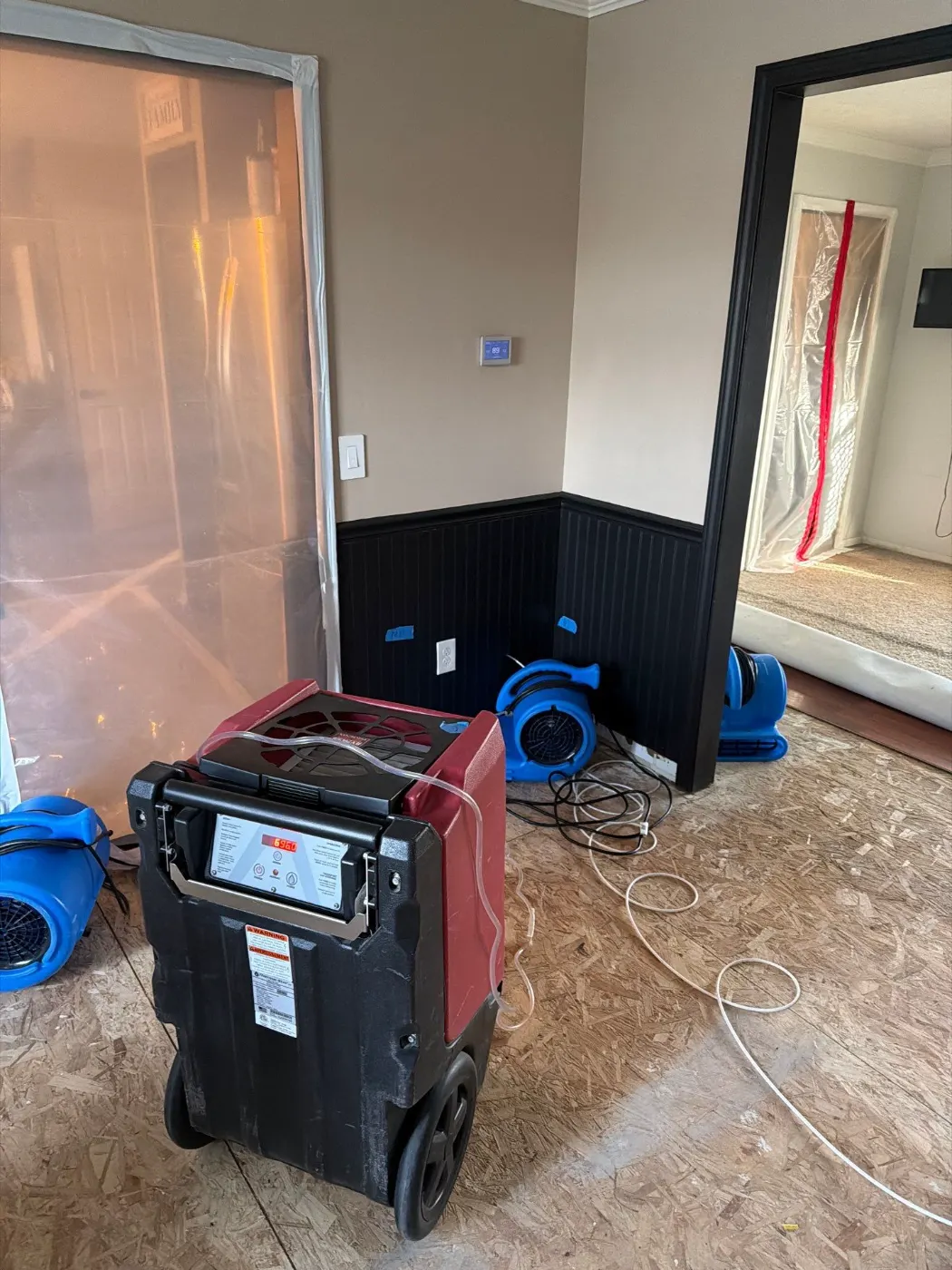
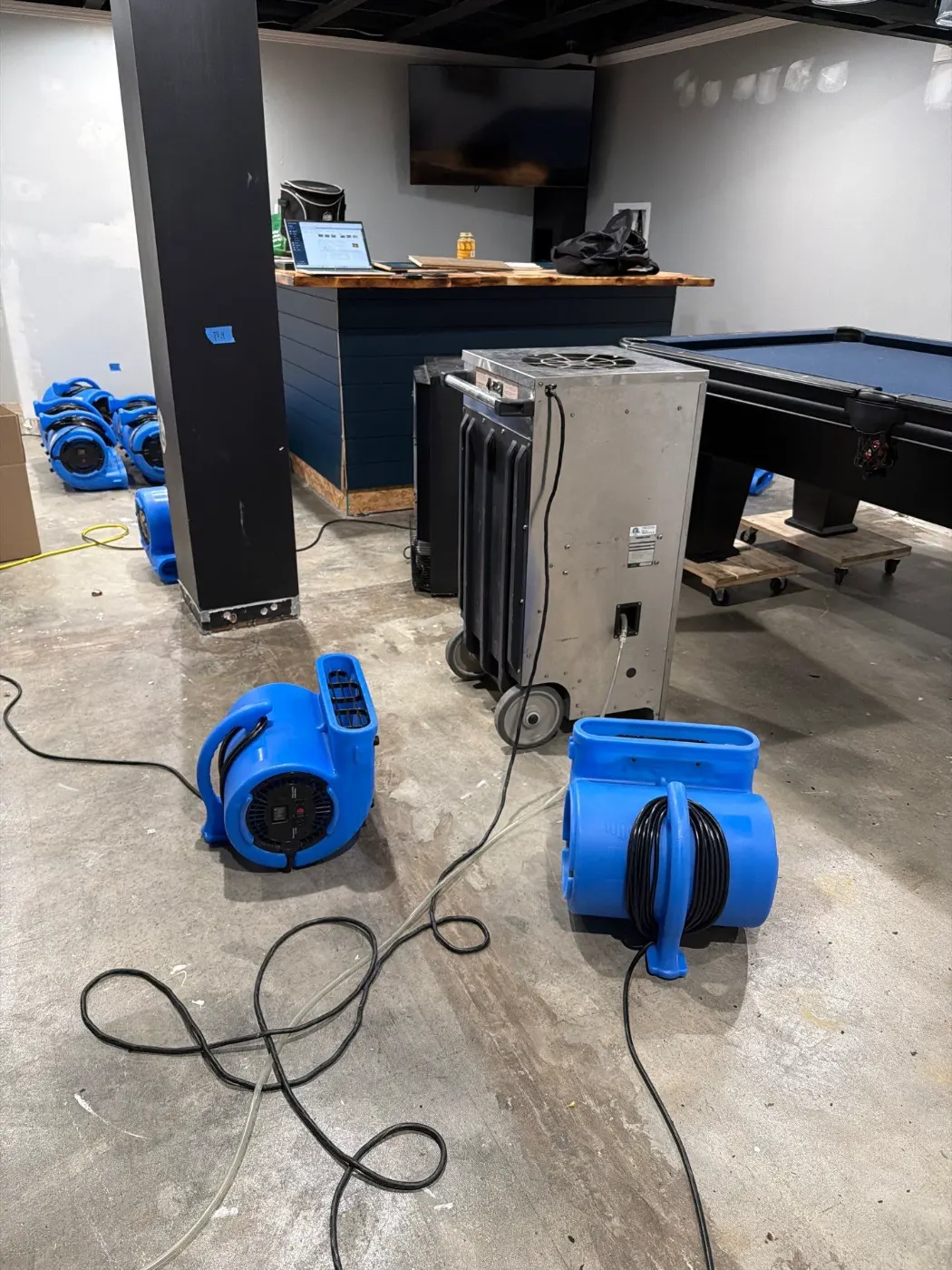
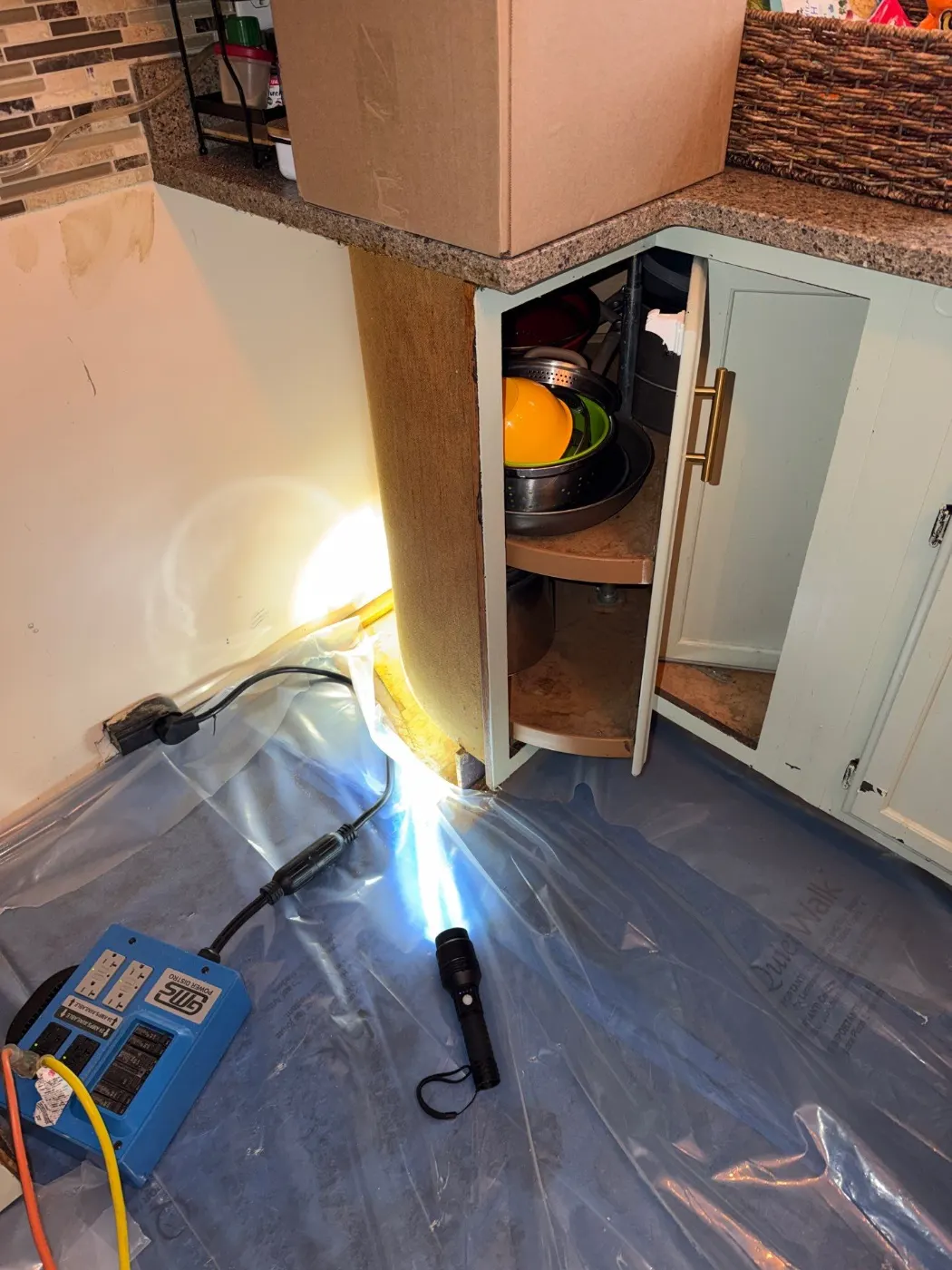
Photographs from real commercial flood damage cleanup jobs completed by our crew in Trader's Point and surrounding areas.
Commercial Flood Damage Cleanup FAQ
Questions Trader's Point property managers ask us about commercial flood damage cleanup.
Guidance and Standards for Commercial Flood Damage Cleanup
- The ANSI/IICRC S500 is the published standard for professional water damage restoration. The current edition is the Fifth Edition, 2021. IICRC S500 Standard
- EPA advises drying water damaged areas and items within 24 to 48 hours to prevent mold growth. EPA: A Brief Guide to Mold, Moisture and Your Home
Trader's Point Neighborhoods We Serve
We take commercial flood damage cleanup calls in every part of Trader's Point. Pick your neighborhood for local details.
Other Restoration Services in Trader's Point
Trader's Point Water Restoration handles the full scope of restoration work. Explore our other services below.
Water Damage Restoration in Trader's Point
24/7 emergency response. IICRC certified water restoration from extraction to full dry out.
Learn more →Basement Flooding in Trader's Point
Basement water emergencies handled fast. Extraction, drying, mold prevention.
Learn more →Sewage Cleanup in Trader's Point
Category 3 biohazard cleanup. Full containment, decontamination, structural restoration.
Learn more →Request Commercial Flood Damage Cleanup
Reach Us Directly
Our team is available 24/7 for emergencies and ready to schedule inspections during business hours.
Need Immediate Help?
For active water or mold emergencies, call us directly. We are available 24/7.